STORE HOURS
MONDAY TO FRIDAY - 10 - 6
WEEKENDS - 10 - 5
HOLIDAYS - 10 - 5
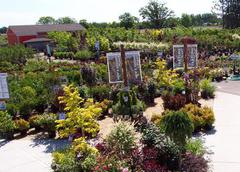
OUR NURSERY STOCK SALES YARD NOW OPEN
** PROJECTED COLD TEMPERATURES WILL MEAN THAT BROWSING HYBRID ROSES WILL NOT TAKE PLACE AS ORIGINALLY INDICATED.
WE APOLOGIZE FOR THE INCONVENIENCE, BUT ROSE GENERAL RELEASE WILL BE DELAYED FURTHER UNTIL SATURDAY APRIL 27TH **
ALL SALES ARE FINAL
If you are uncertain in any way about any item to be purchased here, please do not make it.
 
|
Your Ontario Source for Permaloc Edging
'The World's Best Landscape Edging'
NEW! GeoEdge Green Roof Edging Now Available
Click here for more information.
|

|
| |
|
 |
JAPANESE MAPLES
|
|
Please take a moment to read....
|
THINGS TO KNOW ABOUT JAPANESE MAPLES:
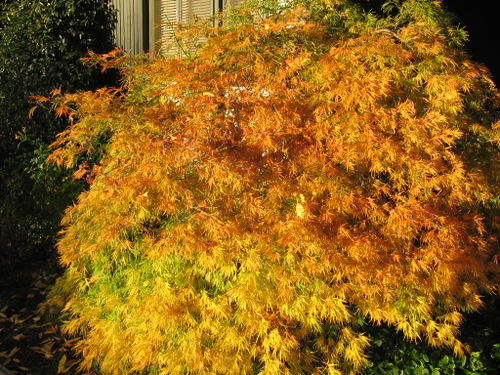
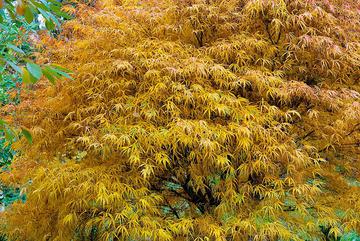
Japanese maples are one of the most sought after plants for a property. Their striking texture, unique form, and beautiful colouring can't help but add value to your landscape.
However, not all locations are suitable for growing this plant, no matter how much you may want to have one. Japanese maples are not terribly happy growing under stress, and may perform poorly or fail entirely if sited or grown improperly. Growing one in a pot year round, for example, is not recommended, and is not warrantied.
Here are some general recommendations. While there are always exceptions, it is hoped that this will make you more aware of this plant's requirements for best growth, and assess prior to purchase the suitability of this plant in your garden.
- Japanese maples perform best in a Canadian Zone 6 hardiness zone or milder. The K-W area lies largely at the edge of this zone, but as we are on the cusp of 5b, it is not uncommon to see a colder than normal winter with some degree of frequency. To lessen the chance of mortality due to cold, it is advisable to have a location where the plant is sheltered from the prevailing northwest winter winds.
- Japanese maples like the sun, but not always do they like it shining intensely upon them all day. If possible, try to find a location that gets a bit of light shade in the afternoon. If it IS intensely hot, it may require a little more attention to monitoring the plant's moisture conditions.
- Japanese maples aren't particularly happy with rapid fluctuations in soil moisture content, nor with sitting in an overly wet location. Many neighbourhoods in the K-W area and surrounding are situated on clay subsoils. This impedes the percolation of water away from the root system, and during wet years (or with excessive watering), the Japanese maple can suffer from root rot. Severe root rot will kill a Japanese maple. While not recommended for planting on clay soils (due to their unforgiving nature), if it is attempted it is imperative that the plant be planted high to the grade (the top of the root ball should be elevated above the lawn grade), left unmulched, and carefully watered. Additionally, should the plant see changes in soil moisture content, the plant may experience 'leaf scorching' as a result. While not generally considered fatal, it does contribute to an unattractive apperance to the plant.
- Many Japanese maples grow eventually to a fairly large size. In general, those that are 'upright growing' will eventually get to become small trees. Those that are weeping in form often do not grow much taller than they are when they are purchased in a person's lifetime. Some care should be taken to ensure that as the plant becomes more valuable there isn't the need to drastically prune the plant to maintain its size. In general, the plant should be spaced at 1/2 its maximum width away from a structure or pathway.
|
|
|
|
NEW FOR 2024 - COLLECTOR'S SERIES JAPANESE MAPLES
|
|
|
Sometimes it is rare indeed to find certain varieties of Japanese maple - and we love finding the unusual.
A Japanese maple vendor of ours asked if we would be interested in offering very rare and hard to find varieties in a smaller 1 gal sized plant for 2024.
Well duh! OF COURSE!
These will be available in limited numbers per variety near the end of April.
Click on an image for details about the plant.
|
|
|
|
|
|
|
|
| |
|
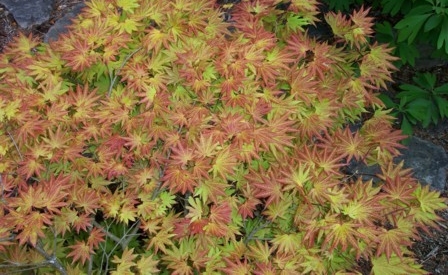
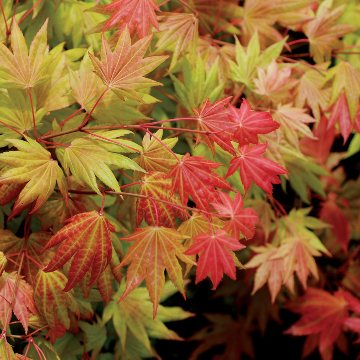
You simply won't believe the beauty of the ever-changing leaves on this stunning Japanese Maple! Autumn Moon is one of the more colourful varieties, unfurling new burgundy-red leaves on top of the mature yellow-green leaves all spring and summer, with a show of orange-crimson in the fall! It grows slowly to 8' to 10' tall by the same wide in full sun to light shade.
|
|
| |
|
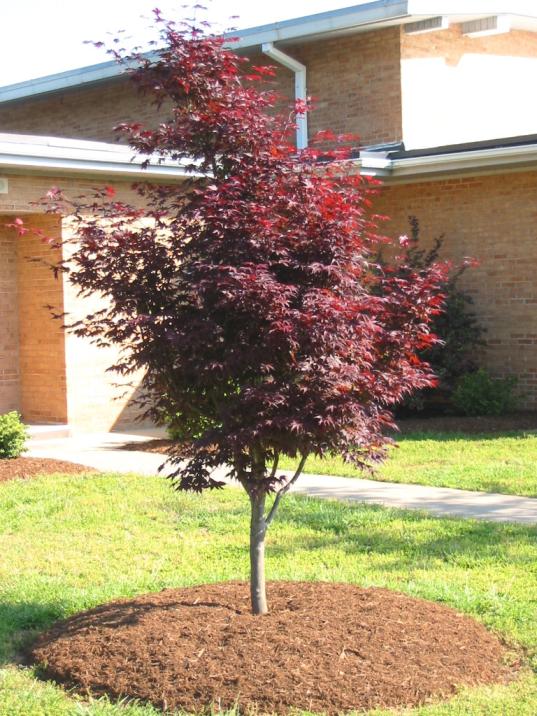
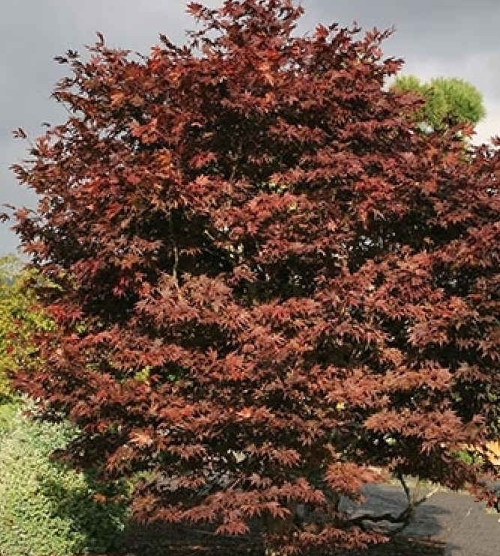
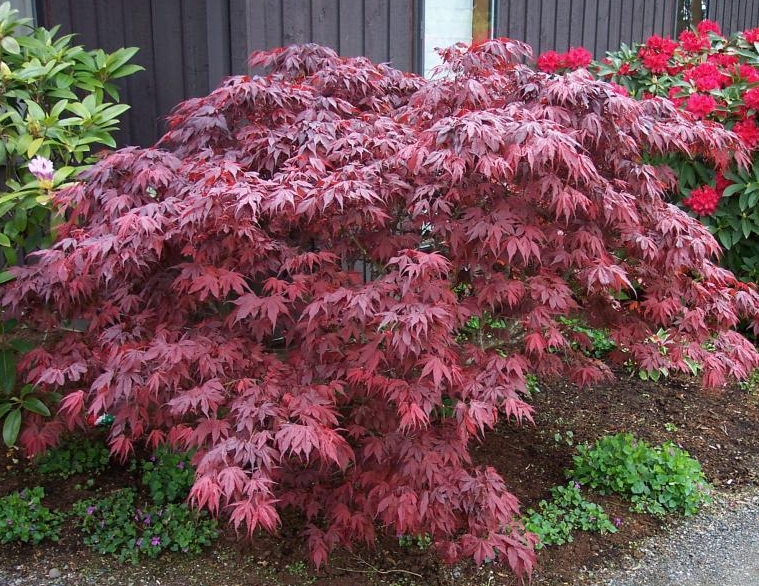
There is a reason this maple is used so extensively in the landscape - it's just one of the best. A slow-growing upright maple that has large, deep red leaves that hold their colour well through the season, it is the 'standard' by which many newer Japanese maples are compared. It is an excellent accent plant that does grow to be a small tree of at least 15 feet tall at 6 inches per year. |
|
| |
|
Here's a Japanese Maple that will knock your socks off! A year round colour factory, the 'Sango Kaku' Japanese Maple, commonly known as Coral Bark Maple, has bark that turns a bright, coral-red during winter on an upright, vase-shape tree to 15-20 feet in height with a 10-15 foot spread. In spring, lime green new growth emerges that contrasts beautifully with the red branches and twigs. Fall leaves are golden yellow with touches of orange, pink and red. This tree must be sited in a protected location. N/A 2024
|
|
| |
|
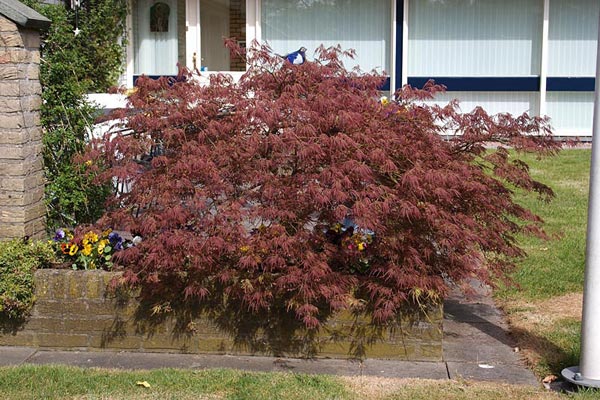
Whether cascading over a wall or filling a sun-dappled corner, this shrub is not only beautiful, but its deeply cut foliage produce a stunning color show that begins with vibrant red in the spring, turning crimson red, then finishes bright red in the fall. Growing 6 ft. tall by 10 ft. wide, like all Japanese maples in K-W is should be sheltered from northwest winter winds. |
|
| |
|
Non-fading large dark red leaves cover this exciting new variety. Similar to Bloodgood, this tree is reputed to grow a little more vigorously, and to hold its summer colour a little better. This tree grows slowly to 15 feet tall at 3 - 4 inches per year. |
|
| |
|
Fireglow is an impressive, vigorous, reliable tree that burns with a fire red colour throughout the summer . A vigorous tree that does not become as tall and widespread as 'Bloodgood' (12 to 15ft tall), it grows best in sheltered, sunny conditions. This variety forms an upright tree/shrub shape with many slender dark red shoots. The tree can reach 6-10 feet in 10 years, and reach 12-15 ft. overall. |
|
| |
|
This maple has very striking foliage. Known also as Ukigomo, the leaves emerge in spring a brilliant white, blushed pink and green. Later in the season it turns into a pastel green and white cloud with a touch of delicate pink on the tips. Truly an arresting sight against a dark background and a spectacular conversation plant in the garden. This slow growing maple is great for small gardens growing to 12 feet by 6 feet wide. It should be sited in a lightly shaded area protected from north west winds.
|
|
| |
|
Geisha Gone Wild Japanese maple is a gorgeous pink and green variegated tree that is similar to Shirazz. It’s a showstopper in the spring with its brilliant magenta and bright pink leaves. As summer approaches, the colours fade to soft pink and pale greens with hints of jade, cream, gray and purple. Bright yellow green bark adds even more eye-popping interest to this already stunning maple. Grows best in full sun to light shade. It is a medium-sized tree that may reach 8 feet tall and perhaps 4 feet wide in 10 years. N/A 2023
|
|
| |
|
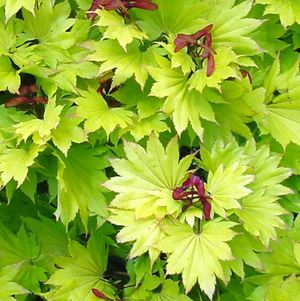
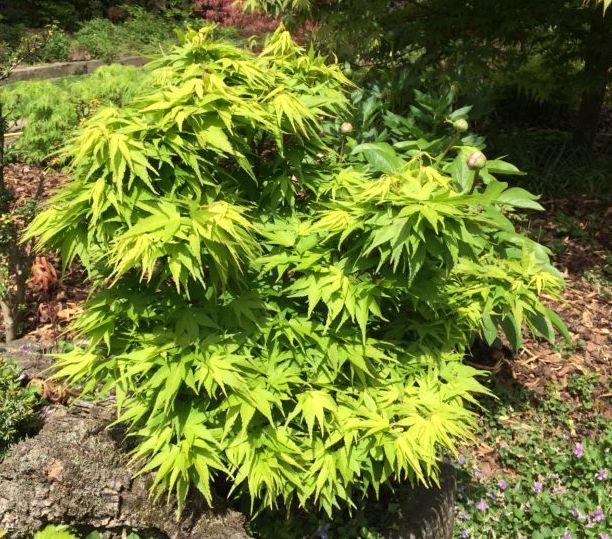
This is a very slow growing maple (it will take 10 years to reach 6 feet) with beautiful sharply cut yellow-green foliage with attractive fall leaves and prominent red flowers and seeds. In contrast with normal green plants, or darker fences or building walls, the plant 'glows'. However, it is not for every location, preferring light or dappled shade best (as too much of either sun or shade can alter the appearance of the leaves). Plant in a a protected area in rich well drained soil.
|
|
| |
|
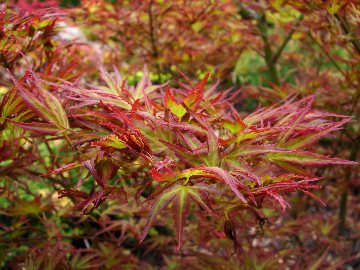
This new dwaf variety has a compact structure, and is marked by bright cherry red spring foliage that maintains an excellent deep maroon colour during the summer. The fall is marked by a deeper bright red colour to the leaves. A true dwarf, it grows slowly to a maximum height of approximately 6 ft. tall by 4 ft. wide, and it's small profile means that it can existing in smaller spaces.
|
|
| |
|
This upright, new Japanese maple has delicate, purple red leaves that are long and slender (like willow) giving the plant a 'bamboo' look. These leaves turn striking shades of red and orange in the fall. It's delicate leaves belies it's toughness as it is one of the more heat tolerant varieties offered. The tree will grow to 6-8 feet tall by the same in width in about 10 years.
|
|
| |
|
It might look like a Japanese maple, but in fact it is a specially bred cascading Korean maple meant to be a much hardier addition to the landscape, but with similar form and refinement. Spring begins as leaves open al blushed orange-red that quickly mature to green. In summer, the finely divided, delicate green leaves are durable and tolerant of sun and heat. Autumn brings a riot of yellow, orange and red foliage. Grows to 8 feet tall by 10 feet wide in sun or light shade.
|
|
| |
|
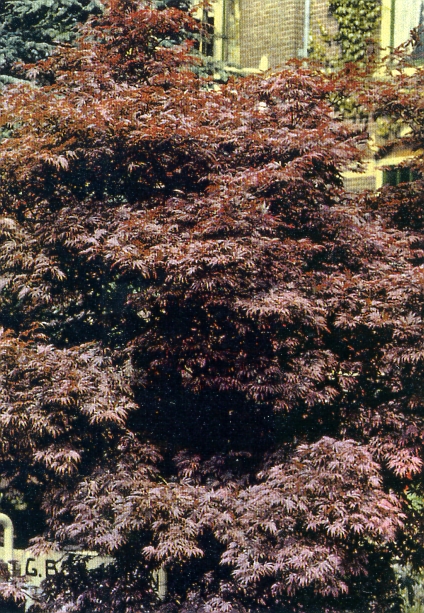
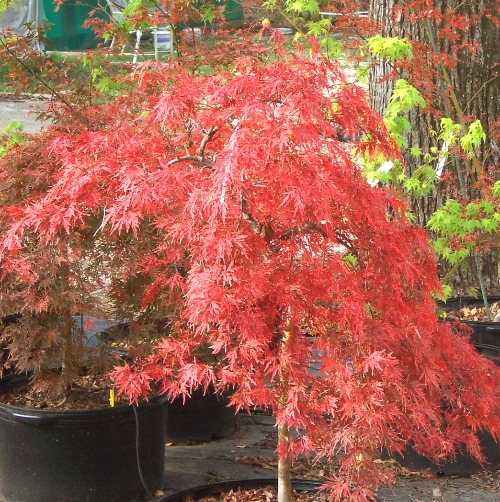
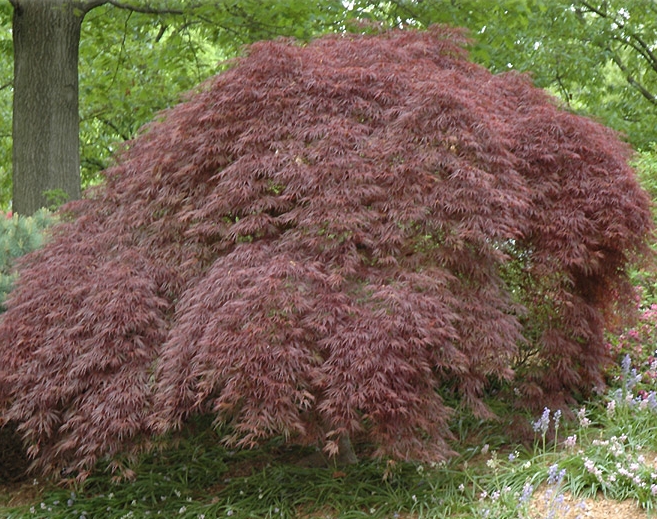
This impressive specimen grows very slowly at about 2-4 inches per year, reaching 6-9 ft tall in a dramatic weeping display of deep red, finely cut red foliage before turning bright crimson in the fall. It is one of the best for keeping its reddish colour in the summer. While it grows well in sun, it prefers having some light shade in the afternoon, and grows best in moist, well drained soil, that should be protected from chilling northwest winds. |
|
| |
|
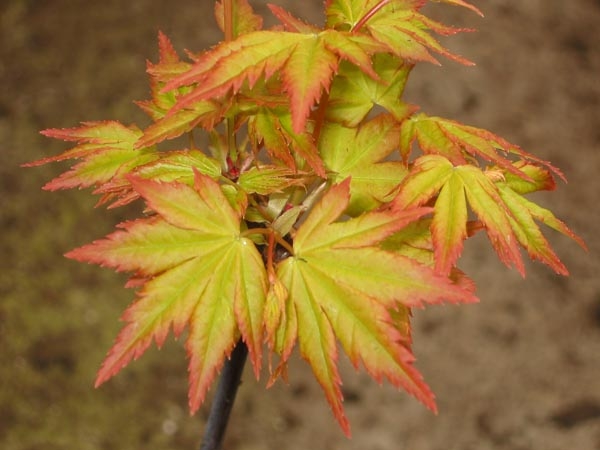
J.D. Vertrees spent his life defining and understanding Japanese Maples, writing the first and still definitive English book on the subject. This tree was one of the very few selected and named by him. Kamagata Japanese maple is an elegant looking dwarf maple that grows to 5 to 6 ft tall and wide. Its leaves unfold in the spring with edges tinted with red to rusty red colouring, that then fades in the summer to bright light green. The fall colors are outstanding shades of fiery red with an occasional touch of yellow and orange - and hold well into the fall. It is both heat and cold tolerant and performs very well in full sun. |
|
| |
|
It's name in Japanese means 'Harp Strings' and the unique leaves this tree has does evoke a delicate nature. The leaf lobes of this slow-growing, upright, green maple vary in width from narrow and strap-like to hardly more than a leaf vein, which produces an overall elegant, soft look. The new leaves unfold with crimson tones, but quickly turn green and then take on shades of orange and gold in the fall. It can grow to 10 feet tall and roughly the same wide, and is reputed to be able to tolerate more shade than most Japanese maples do. |
|
| |
|
This rare Japanese Maple has a long history, having been grown for well over 125 years. It grows slowly and compactly to around 6', though taller trees are possible. What sets this tree apart are the deep green leaves that give the tree an overall tufted and irregular appearance - a bit like a bonsai. The transition to fall color comes late in the fall season and is a striking mix of shades of orange with red highlights.
|
|
| |
|
This unique dwarf Japanese maple is best known for its use as bonsai. Very dwarf and slow growing, it has leaves that are spaced closely together on shor shoots which helps define its structure, colour and density. The leaves on this little dwarf overlap one another to give it a unique appearance. When the leaves first unfold in the spring they are a light yellow-green colour becoming more medium green as they mature. These in fall turn golden-orange in the fall with bright red tips. The leaves are slightly longer than those of other dwarf forms. The growth structure is multi-branched, forming a compact little plant. Could grow to 6 feet in 10 years, and is best sited in sun to partial shade. |
|
| |
|
This small deciduous tree has a full rounded canopy. The spring foliage opens bright red, morphs to a chartreue yellow-green in summer with flashes of red new growth superimposed, and then the overall tree turns a burnished garnet red in fall. It preferes morning sun and afternoon shade in well-drained soil. The ultimate size varies widely believed to be around 8 to 10 foot in height and width. Reputed to be hardier than 'Aureum', it should still be carefully sited protected from northwest wind exposures. N/A 2024
|
|
|
| |
|
To be clear, this is not a Japanese maple - but it is rather a 'look-alike'. Why is it shown here? In many ways the look it presents is much like a Japanese maple, but this Korean variety is a lot tougher. It is from a brand new series of maples that have been bred to tolerate harsh and fluctuating weather to as low as -34°C. Japanese maple-like leaves emerge reddish in spring changing by midsummer to green, followed by a dramatic orange-scarlet in fall (as shown). Grows to 20 ft. high by 15 ft. wide at 12 inches or more a year in sun or light shade. |
|
| |
|
This hard to find Japanese Maple variety grows slowly in an upright habit to become a large shrub or small tree, and is known for it's changing colour display. It exhibits a chorus of leaf colour in shades of pink to orange to yellow that change from spring through fall, and there is even bright green bark in the winter. This particular Japanese maple would prefer a location that offers afternoon shade. |
|
| |
|
This striking weeping japanese maple changes its personality all season long. It emerges with tones of green and orange in early spring that quickly turn to purple. As spring turns into summer the older leaves start to slowly turn green, with a unique mottling of green and purple through the leaves. About the time the entire plant becomes green in mid to late summer 'Orangeola' decides it is time to grow again, putting out red new growth that lays over the older foliage. Then in fall it really puts on a show with traffic stopping bright orange-red leaves. It grows best in sunny sheltered locations.
|
|
| |
|
This compact, round deciduous shrub has graceful and colourful soft red foliage in spring which darkens to deep plum-red colour in the summer, and then brightens to sunset-red hues in fall. While opinions differ on the ultimate size of this tree, it is by no means a fast grower and would be perfect for the small garden as it would be quite awhile until it grows to specimen of 6' tall x 6' wide. It prefers sun to partial shade in well-drained soil. The foliage is interesting with leaves bunched at the end of each shoot, and it is a lovely small accent plant. ** N/A 2023
|
|
| |
|
The most interesting feature of this medium sized upright tree is the deep purple leaves that emerge in spring with prominent darker purple/black veins. This colour is more pronounced where there is a bit more sun in the plant's life, but as with many Japanese maples this one would relish a little afternoon shade. In more shade the colour is more greenish with purple undertones. Fall colour varies from deep red to reddish orange. Best in a protected setting, it will grow to 8' tall by 4 feet wide in about 10 years. |
|
| |
|
A beautiful weeping japanese maple that has broad leaves. Starting chartruse, the leaves mature to a rich green for the summer before they turn orange-red in the fall. Ryusen grows 5-6 ft. in 15 years. The weeping form as pleasing acitecture for winter interest, as long as you keep it out of damaging north-west winter winds.
|
|
| |
|
Named after its source, this upright dwarf variety boasts dense, compact branching in an outstanding rounded form. Bright red spring leaves darken as the foliage matures. Fall foliage turns rich orange-red, with dark red stems in the winter adding drama to the garden. Growing 3-6 inches per year to 6 ft. tall and wide, it requires partial shade and well-drained, clay-free conditions.
|
|
| |
|
A prize for any collector, this Japanese Maple has attractive gold-variegated deciduous lime green foliage with hints of pink throughout the season. The small lobed palmate leaves are highly ornamental and turn outstanding shades of yellow and in the fall. Growing to 10 ft. tall and wide and performing best in dappled sunlight to light shade, it makes for a striking small ornamental tree.
|
|
| |
|
Reputed to have been bred as a mutation from 'Bloodgood', 'Shaina' grows upright and has dense two toned red foliage that sits upon short shoots, giving it a 'tufted' appearance. It is a very slow grower that reaches to a height of 5 ft. in approximately 10 years. The leaves emerge bright red in the spring and turn gradually more dark purple red in the summer, and then turn again to a bright crimson colour in the fall. 'Shaina' holds its tremendous color through the summer and into the beginning of the fall season. |
|
| |
|
This very nice, classy japanese maple produces the most brilliant red spring foliage of all maples! Its flaming scarlet colour holds for several months before gradually changing to mottled red then green by summer. Growing slowly to 8 ft. tall by 10 ft. wide, it grows best in a protected location, and it ends the season with a dramatic display of orange and red leaves. ** N/A 2024
|
|
| |
|
Wow! Japanese Maples are always striking additions to the landscape, but this variety offers multi-coloured leaves that are a blend of pinks, greens, and creamy-white. The new growth will show uniquely crimson-pink with white margins, and the fall colours are tones of crimson red to scarlet. It will grow to about 15 feet tall by 12 feet wide in an upright form at first that becomes gracefully arching with age. ** N/A 2024 - See also Geisha Gone Wild
|
|
| |
|
Rich deep crimson-red finely cut leaves unfold in spring but soon change to dark purplish red. To add to its appeal, the bark of the twigs and young branches are deep maroon-red. Slow growing at 3-4 inches per year, it could spread 4-5 feet wide. Plant in a sheltered area in sun or part shade. |
|
| |
|
This stunning Japanese maple is quite striking with pretty pink leaves in the spring. These leaves then age to green with pink margins during the summer - and these pink hues can often last well into the summer. It is a very slow growing small tree that may reach 6' tall x 3' wide in 10 years, and makes an excellent choice with it's long lasting pinkish colour. Grows best in sun to partial shade.
|
|
| |
|
Literally meaning ‘Red Fingernail’, this large dense variety has a strong central leader and a casual rounded form that is covered in small lobed spring leaves that are tipped with red. Growing slowly to 10 ft. tall and wide in about 20 years, it grows best in dappled light in a protected site. Its green summer foliage gives way to a final stunning fall show of yellow, orange and crimson! * Special order only
|
|
| |
|
Ideal for narrow spaces, this distinctive Japanese maple has a strong upward branching habit. Growing 3-4" per year to approximately 10 to 14 ft. tall in sun or light shade, it spreads ultimately only to about half as wide. It is covered in deep red leaves all summer and they mature to a spectacular red fall color and cling into the fall longer than most Japanese maples.
|
|
| |
|
This popular Japanese maple dates back to the 1920's when it was selected because its leaves had a more flowing appearance as they cascaded down the sides of the plant. Foliage is bright green all season changing to brilliant golden tones suffused with crimson blends in fall. Grows very slowly to 10 feet high by 12 feet wide in full sun to part shade.
|
|
|
|