|
 50th Anniversary Year
WE ARE OPEN...
SPRING HOURS
Monday to Friday 8 - 8
Saturdays 8 - 5
Sundays 9 - 5
Victoria Day 9 - 5
|
|
|
YES! I WANT TO SAVE THIS SEASON! Join Grobe's Preferred Gardener Club For Timely Email Advice and Exclusive Pricing FREE TO JOIN! Clicking link will not result in spam.
Grobe's Preferred Gardener Club Offers You Even More! Visit our KEYTAG PARTNERS - the great local companies listed here and with your Preferred Gardener keytag you will enjoy even more savings plus the right advice to further enhance your gardening lifestyle. Click here for more details.
|
|
Your Ontario Source for Permaloc Edging
'The World's Best Landscape Edging'
NEW! GeoEdge Green Roof Edging Now Available
Click here for more information.
|
| |
|
|
See us today for quality Kichler brand low-voltage landscape lighting.
Click here for more information.
|
| |
|
|
Mmm! That's Good!
See us for delicious Cider Keg Sparkling Beverages
Non-alcoholic, no artificial sugars
Award Winning Preserves including
'Pumpkin Pie In A Jar'
|

Artisans of Well-Being
Premium French toiletries
Non-greasy and mildly scented hand creams and soaps
Dans un Jardin
|
|
|  |
 |
 | Preferred Gardener Resource Library |

Welcome To Grobe's Preferred Gardener Resource Library!
Here you will find the 'Snip-Its' archive of the many articles, tips and other pertinent gardening information that Grobe's has published exclusively for Preferred Gardener members since the club's inception in 2000.
Here also you will find a collection of great articles prepared by Landscape Ontario (the provincial horticultural trades association) especially for Grobe's.
|
| SPOTLIGHT ON.... |
| |
|
|
Little Lime Hydrangea
This small growing shrub is related to the very popular Limelight Hydrangea, but in a more compact and miniature form. It's prolific cone shaped lime greenish/white blossoms are formed in mid-summer, and they mature to a pretty pink as the seasons tread into fall. Best of all, they don't flop over like some older hydrangea varieties. It grows to 3-4' tall by approximately the same diameter in sun or partial shade. This type of hydrangea only requires a bit of formative pruning in early spring, and regular deep watering.
|
|
|
|
These great tips have been provided by our Keytag Partners to help Grobe's Preferred Gardener's with their gardening lifestyle.
Bob Hobden says: "The grass is starting to grow and that means it's time to get your lawnmower out of hibernation and dust off that string trimmer and all your other lawn aand garden toys. To get the best performance from your equipment, check that your air filter is clear of dirt and debris and try to use only fresh gasoline. Most people don't realize that fuel actually goes stale within 6 to 8 weeks. Also, the recent addition of ethanol to many fuels has caused a host of problems for equipment, especially 2 cycle engines. Problems include engines becoming difficult to start, they run hot, or they are difficult to restart once they have been running. So the next time you take your jerry can to the pump, just remember; higher octane is better and always try to avoid ethanol fuels. One last thing, don't forget to sharpen that lawnmower blade. Happy mowing!"
|
|
|
|
|
|
PREFERRED GARDENER ANSWER SERVICE Have a question? Need some help? Looking for a plant or item? Need to update your email address? Click here to submit it through the Preferred Gardener Express Email Account.
|
|
Gardening Questions & Answers
Q: When is the best time to start grass seed? A: Grass is a cool weather crop, so it is certainly worth considering to overseed with grass seed in mid-spring, before the weather gets too warm. While each year is different, in general the best time in spring to overseed your lawn is about the third week of April to the third week of May. Bear in mind that prolonged cold soil temperatures and wetness may affect the germination rate for the grass seed. Never fear, if your 'take' of grass in the spring isn't tremendous, you can always overseed very successfully again in late August to early September.
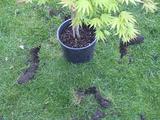
Q: What do I need to know to plant a tree properly? A: Planting a tree doesn't need to be difficult (although digging through roots and rocks can be!). Here are some tips. First, select a spot for the tree that is not in the path of water and where there is adequate light for the tree species you have picked. Next, dig a hole that is roughly twice the size of the pot in width, by about the same depth. Most trees are planted so that the root ball should be about 2 inches higher than the surrounding lawn. This depth is critical in particular with trees planted on heavy soils, as a tree planted too deep could be more susceptible to root rot. Some of the soil from your hole can likely be re-used (the topsoil), and it should be amended with compost and peat moss to make a rich planting soil. Below the topsoil might be good soil, or it might be junk. When in doubt, throw it out! Replace the soil with more good planting mix. Firm the soil around the root ball, and make a raised lip or dike around the perimeter of the tree to retain applied water. Stake your tree for a year or two to ensure it stays straight, and don't forget to water the tree with Parkwood Transplanter fertilizer so that the rooting hormone in it can force the tree to set new roots. That's it! |
|
|
|
|

|
|
|